
Knowing the right way to clean your kitchen hood is crucial not only for maintaining the hood itself but also for ensuring a hygienic space and extending the life of your kitchen.
Regularly cleaning your hood removes grease, smoke, heat, and strong odors from the air during daily cooking.
Over time, dirt and grease accumulate inside the filters, hood, and ducts. If such buildup is not removed, then it can further affect hygiene, airflow, and safety. This is where the need to hire proper kitchen hood cleaning services comes in.
Keep reading as we explore a step-by-step guide to cleaning and maintaining your kitchen hood, the areas that require regular cleaning, and the importance of hiring a professional cleaning service.
Why Kitchen Hood Cleaning Is Important
Kitchen hoods technically handle heavy grease and smoke every day. Without proper cleaning care, grease builds up quickly. This can create several problems.
A dirt-filled kitchen hood can:
- Trap grease that can turn into a fire hazard
- Reduce ventilation and airflow
- Affects overall kitchen cleanliness
- Spread unpleasant odors
- Increase strain on any connected systems
Regular kitchen exhaust maintenance, performed by our in-house team of certified cleaning technicians, helps prevent these issues.
Our experts will ensure the hood is in good working order and perform maintenance, repair, and cleaning services to prolong the equipment’s lifespan.
How Often Should You Clean a Kitchen Hood?
The cleaning frequency of your kitchen hood depends heavily on how the kitchen space is used.
Here is a simple cleaning guideline:
- If it’s light cooking, like small cafes, then you must clean the hood once every three months
- If it’s moderate cooking, like restaurants, then you must clean the hood once every one or two months
- If it’s heavy-duty cooking, like in a commercial restaurant, you must clean the hood monthly or more often.
These are basic cleaning timelines, but you must look for a professional kitchen hood cleaning service once the grease becomes visible or airflow feels weak.
Our in-house team of hood-cleaning experts will analyze your kitchen hood’s use case and recommend the best cleaning schedule.
Step 1: Turn Off Power and Let the Hood Cool
Before starting with the cleaning process, safety must be given priority.
Always ensure to:
- Turn off the hood power source
- Let the hood cool off completely
- Turn off the cooking equipment used below the hood.
Cleaning a hot hood can damage parts and even cause serious skin burns. This is why you must let professionals handle the cleaning rather than trying to do it yourself.
Step 2: Remove and Clean the Filters
Filters are known for trapping dust and grease in them. They need regular cleaning.
How to clean filters:
- Remove the filters carefully
- Soak them into hot water with degreasing soap
- Scrub them gently using a soft brush
- Rinse it thoroughly using water
- Let the filter dry completely before installing.
Clean filters can improve kitchen ventilation and even reduce grease buildup in the hood. Filter cleaning can sound easy, but if you rinse them too hard, they can be damaged.
Our hood cleaning experts improve kitchen ventilation by using the right equipment and cleaning tools to remove dust and grease from your hood filters.
Step 3: Clean the Hood Interior and Exterior
Once the filters are clean, the next focus is on the hood body.
Cleaning steps:
- Use a non-abrasive degreaser
- Wipe the interior surfaces wherever grease collects, mostly
- Clean the corner areas and seams carefully
- Wiping the exterior to remove potential stains and fingerprints
Using harsh chemicals on the hood interior and exterior body can damage them.
Also, cleaning the hood body without using proper gloves and cleaning chemicals can damage your skin and peace of mind.
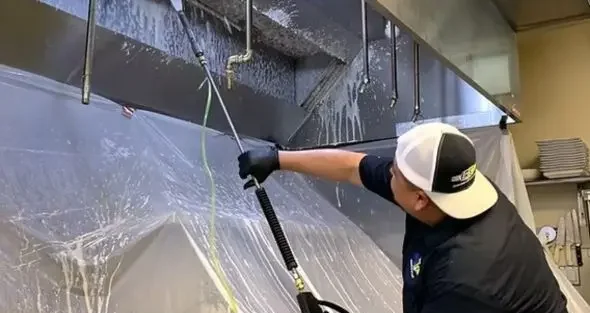
Our team of cleaning experts will be at your location with the best professional cleaning equipment to handle your kitchen hood’s interior and exterior cleaning needs.
Step 4: Check and Clean the Duct Area
Grease accumulation does not stop at the hood. It can further travel into the ducts.
Signs the ducts need cleaning attention include:
- Reduced airflow
- Persistent odors
- Visible grease near duct openings
In many cases, internal duct cleaning must be performed by trained, certified professionals.
This is where our commercial duct cleaning service comes in, especially to remove hidden grease buildup that normal cleaning cannot reach.
Step 5: Inspect the Fan and Ventilation System
The exhaust fan helps in pulling air through the hood and ducts.
Always inspect for:
- Grease buildup on fan blades
- Unusual noises coming out of the fan areas
- Weak air suction
If the fan is damaged or found dirty, then it can further affect the entire HVAC system connected to the kitchen.
Keeping the fans clean through our cleaning services will ensure a smooth airflow and reduced system stress.
Step 6: Maintain a Regular Cleaning Schedule
One-time hood cleaning is not enough to maintain the overall working efficiency of the system. Regular maintenance keeps the hood working properly.
Simple maintenance tips:
- Wipe the hood exterior surfaces daily
- Clean the filters weekly or bi-weekly, under the supervision of professional cleaning experts
- Inspect ducts and fans monthly to determine grease and dust buildup in them
- Schedule your deep cleaning with us whenever grease buildup appears
Following a consistent routine supports overall hygiene in the kitchen space and reduces emergency repairs.
Our cleaning team will convey the best kitchen hood maintenance tips after performing deep cleaning or maintenance services.
When Professional Cleaning Is Needed
Some parts of every kitchen hood system are hard to access. Grease found inside fans and ducts requires the use of special tools.
Hiring a professional kitchen hood cleaning service is recommended whenever:
- Grease buildup is visible or found to be heavy
- Airflow becomes poor
- The kitchen operates for long hours
- Safety inspections are due
Our kitchen hood cleaning professionals utilize proper equipment to clean deeply and safely.
Benefits of Proper Kitchen Hood Maintenance
Maintaining the kitchen hood clean offers various advantages.
Key benefits include:
- Improved kitchen cleanliness
- Reduced fire risk
- Better airflow and ventilation
- Longer equipment life
- Lower odor levels
Regular maintenance done through our cleaning services will improve the working conditions of your kitchen hood and even let your kitchen operate seamlessly without facing random interruptions.
Common Hood Cleaning Mistakes to Avoid
Never skip regular hood cleaning as scheduled by our experts and wait until grease builds up. This can only put additional stress on the system and lead to unnecessary damage.
Using harsh chemicals without professional supervision can damage the hood surfaces.
Ignoring the duct is yet another common mistake that can only bring back bad odors into your kitchen space, even after deep cleaning the hood.
All these small mistakes can potentially reduce airflow and cost you more. Always ensure to stick to the hood cleaning tips and cleaning timelines as derived by our experts.
Conclusion
Cleaning and maintaining the kitchen hood is essential for hygiene, safety, and smooth kitchen operations. From inspecting ducts and fans to cleaning filters, every step plays a crucial role in keeping ventilation effective.
Regular maintenance supports better airflow, reduces grease buildup, and protects connected systems.
When deeper hood inspection or cleaning needs arise, working with an experienced HVAC contractor makes a huge difference.
At Powerizearabia Limited Company, we provide reliable solutions for duct maintenance, kitchen hood cleaning, and ventilation support. Our certified team is an expert in keeping commercial kitchen spaces clean and lets them run efficiently for years.
Reach out to us now to clear your kitchen hood-cleaning-related queries and to understand how our professional cleaning help will let you focus on daily kitchen operations with confidence.