
Industrial machines and processes do generate a lot of heat. If the heat isn’t removed, then it can bring in potential damage to your equipment and even ruin your finished products. This is where chillers help in managing heat distribution and let everything run at the right temperature.
This type of system can keep things cool and let them run smoothly. Picking the right type of chiller is crucial to let your HVAC system last longer. You must first understand the differences between air-cooled and water-cooled systems.
Both have their set of unique advantages and disadvantages, impacting factors like maintenance requirements, energy efficiency, and more.
Keep reading as we present a valuable guide that will help you navigate the differences between these two types of chillers and make an informed decision.
What Are Industrial Chillers?
Industrial chillers are essential components that you need to include in your HVAC installation process. It is designed in a manner to remove heat from a liquid through a vapor-compression or by following absorption refrigeration cycle.
The cooked liquid further gets circulated through the equipment to cool down your industrial facility or office spaces.
Chillers are widely used in various industries that involve key operations like food processing, manufacturing, and in data centers to maintain optimal indoor operating temperatures.
Types of Chillers:
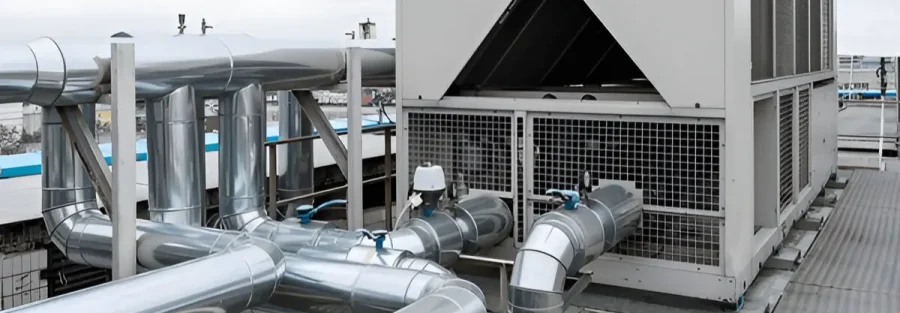
1. Air-Cooled Chillers: This type of system helps dissipate heat by using ambient air. They are installed outdoors and utilize fans to facilitate the overall cooling process.
2. Water-Cooled Chillers: These systems do use water coming from an external cooling tower to remove excessive heat generated in your working place. They are installed indoors, preferable for larger installations due to their higher efficiency.
Our HVAC maintenance contract involves regular inspecting, cleaning, repairing, and replacing parts of your chillers.
Air-Cooled Chillers
Working Mechanism
Air-cooled chillers do operate by passing the ambient air over a condenser coil to remove excessive heat as generated from the refrigerant.
Fans bring in outside air, which further absorbs the heat from the refrigerant, letting it to condense. The cooked refrigerant cycles back through the system to complete the cooling process.
Advantages of Air-Cooled Chillers
- Ease of Installation: Air-cooled chillers require small infrastructure. They do not need water supply systems or cooling towers to cool down your place. This makes them easier and quicker to install while our experts take forward your HVAC installation process.
- Lower Maintenance Requirements: Without having the need for cooling tower maintenance or water treatment, the Air-Cooled systems have lower maintenance demands.
- Cost-Effective for Smaller Applications: They remain economical for smaller applications or facilities where water availability is said to be limited.
Disadvantages of Air-Cooled Chillers
- Reduced Efficiency in High Ambient Temperatures: Their performance might decline when used in hotter climates. This is because the chillers in this type highly rely on ambient air for cooling.
- Higher Noise Levels: The fan operation generates significant noise, which can be a major concern, especially if your facility is located in noise-sensitive environments.
- Shorter Lifespan: Air-cooled chillers do have a lifespan of 15 to 20 years, which is certainly shorter when compared to the water-cooled systems.
Water-Cooled Chillers
Working Mechanism
Water-cooled Chillers do help remove heat from the refrigerant by transferring it to water. Later, it gets circulated to the cooling tower to dissipate the heat into the atmosphere, and the cooked water returns back to the chiller to continue with the cooling cycle.
Advantages of Water-Cooled Chillers
- Higher Energy Efficiency: Water-cooled systems are typically more energy-efficient, especially when they are integrated in large-scale applications. This is possible due to water’s superior heat transferring properties.
- Longer Lifespan: These systems do often last anywhere between 20 to 30 years. They do offer a longer operational life when compared to air-cooled chillers.
- Quieter Operation: Since this type of chiller does not rely on larger fans, they tend to operate quietly. Incorporating them in your facility will be beneficial, especially in noise-sensitive settings.
Disadvantages of Water-Cooled Chillers
- Higher Initial Costs: The need to add components like water treatment systems and cooling towers do increase the upfront investment cost.
- Complex Maintenance: Regular HVAC maintenance including water treatment must be done to prevent corrosion and scaling. Our experts will help in performing and explaining the importance of HVAC maintenance to reduce operational complexity.
- Water Usage and Environmental Concerns: This type of chiller system consumes significant amounts of water. Based on your location, you might face regulatory challenges related to water consumption and discharge.
Common Use Cases for Water-Cooled Chillers
Water-cooled chillers are the best choice for large facilities having substantial cooling requirements, like the data centers, hospitals, and industrial plants. This type of chiller offers higher efficiency and longevity in these places, given the higher initial costs.
With our HVAC AMC service options, you can certainly prolong the operational years of your water-cooled chillers.
Key Differences Between Air-Cooled & Water-Cooled Chillers
Energy Efficiency
Water-cooled chillers offer higher energy efficiency, particularly when installed in large-scale operations. This is due to water’s better heat transfer capabilities. Air-cooled systems on the other hand consume more energy, especially in warmer climates where the ambient air temperatures remain high all through the day.
Installation and Maintenance Costs
Air-cooled chillers are basically less expensive to install and maintain. They do not require having additional infrastructure like cooling towers. Water-cooled systems, while more efficient, incorporate higher installation and maintenance costs given their complexity.
Environmental Impact
Air-cooled chillers might contribute to higher energy consumption and even noise pollution, while water-cooled systems raise higher water usage concerns and potential contamination. Both these systems have their set of environmental considerations that must be evaluated based on your specific application and location.
Performance in Different Climates
Water-cooled chillers do maintain consistent performance when exposed to different climates, especially the hot summer days. This is possible due to their reliance on water for heat exchange. Air-cooled systems might experience efficiency drops from time to time, especially in high ambient temperatures, further making them less suitable for use in hotter regions.
Which Chiller Type Is Right for Your Industrial Needs?
If you are confused in picking the right choice between water-cooled and air-cooled chillers, then consider following below mentioned factors one by one:
- Facility Size and Cooling Requirements: If you have large facilities with high cooling demands then you will benefit out of choosing water-cooling systems. If you have smaller operations then you may need to pick the simplicity of air-cooled units.
- Budget Constraints: If upfront costs are your major concern, then go with air-cooled chillers that tend to be an economical and budget friendly solution.
- Water Availability: If your facility is located in areas with limited water resources, then investing in air-cooled systems will be an advantageous decision. This is due to the system’s minimal water usage.
- Maintenance Capabilities: If you prefer higher efficiency, then go with water-cooled systems that require regular HVAC maintenance to avoid operational complexity. If you prefer low-maintenance then you need to pick air-cooled chillers.
Given your industrial chillers installation or maintenance need, our experts provide tailored advice and solutions that can prolong the lifespan of your system and avoid facing last minute repair or part replacement needs.
Conclusion
Understanding the differences between air-cooled and water-cooled chillers is essential to take forward your HVAC project. You need to make an informed decision that rightly aligns with your industrial cooling requirements.
Both these systems have their own set of advantages and disadvantages, and the best choice depends on various factors like budget, facility size, climate, and maintenance capabilities.
At Powerize Arabia, the leading HVAC contractor in Jubail, our experts are one phone call away to assess your options and implement the right HVAC installation process that suits your cooling needs.
To learn more about how our experts can assist the cooling needs of your facility, contact us today.