
Most people prefer spending their time indoors, whether at work, home, or school, which certainly makes the quality of air we breathe every day a crucial factor in our overall comfort and well-being.
This is where IAQ (Indoor Air Quality) maintenance becomes vital. Poor maintenance of indoor air pollution can silently contribute to respiratory problems, allergies, and decreased productivity. Incorporating a well-designed HVAC system helps filter, regulate, and improve your indoor air quality to a greater extent.
Keep reading as we explore the possible ways your HVAC plays a vital role in creating a healthier indoor environment with its smart technologies, the right ways to maintain the system to enhance its long-term productivity, and identify common indoor pollutants.
Understanding Indoor Air Quality (IAQ): What You’re Breathing In
What is IAQ?
Indoor Air Quality denotes the air condition present within buildings and structures that reflects on the health and comfort of the occupants. It includes various factors like humidity, temperature, ventilation, and the presence of indoor pollutants like mould, dust, and chemicals.
According to the EPA, the indoor air quality can be 2 to 5 times more polluted than the outdoor air, given the importance of having air purifiers and smart thermostats.
Common Indoor Air Pollutants & Their Sources
- Dust and Allergens: Dust mites, pollen, and pet dander are some of the common indoor dust allergens. These particles can bring in numerous health-related problems when our human body inhales them. HVAC filters help trap all these particles.
- Mould and Mildew: Excess moisture can lead to potential mould growth. By installing an HVAC system, you can prevent their formation and even control the humidity levels.
- Volatile Organic Compounds (VOCs): VOCs are most commonly found in household products like paints, furniture, and cleaning supplies. Incorporating proper air filtration systems and air purifiers helps mitigate the potential risk of these compounds.
- Particulate Matter (PM): Various indoor and outdoor sources contribute to particulate matter. Mostly it comes from candles, cooking, and outdoor air filtration. HVAC filters installed by our expert team will act as the first defense system against potential particulate matter.
- Carbon Dioxide (CO2): High indoor CO2 levels certainly indicate inadequate ventilation. Such higher levels happen due to poor indoor ventilation, further causing headaches and fatigue.
Our proficient team will analyse your indoor space and then install a proper HVAC system, providing proper ventilation to lower CO2 concentrations.
Effects of Poor IAQ
Continuous exposure to indoor pollutants can easily trigger various health-related problems, such as:
- Allergies and skin irritation
- Asthma and respiratory problems
- Reduced cognitive function
- Sick building syndrome
A study conducted about controlled indoor exposure of green and environmental office environments states that improved IAQ leads to a 101% increase in terms of cognitive scores.
How Your HVAC System Enhances Air Quality: Beyond Just Comfort
A modern and energy-efficient HVAC system ensures consistent ventilation, proper humidity control, and efficient filtration, all happening in one place.
Ventilation: Fresh Air In, Pollutants Out
Proper ventilation plays a crucial part in flushing out stale air and bringing in fresh outdoor air. Without proper maintenance of CO2 levels, ventilation, and VOCs, moulds and other air pollutants can easily build up.
- Continuous supply of fresh and clean air can be achieved through HVAC installation. The system brings in fresh air supply through energy recovery ventilators (ERVs), further creating utmost comfort indoors.
- Proper airflow achieved through air filtration systems prevents the accumulation of mould and moisture.
Filtration and Air Purification
HVAC filters act as the first line of defense against any kind of airborne contaminants. Modern air filtration systems have air filters that can wisely trap pollen, dust, bacteria, and viruses.
- MERV-rated filters: MERV (Minimum Efficiency Reporting Value) ratings do range from 1 to 16. Higher ratings can effectively trap smaller particles like smoke and bacteria.
- HEPA filters: Captures 99.97% of particles that are as small as 0.3 microns.
- Advanced technologies: Activated charcoal filters, UV sterilization, and bipolar carbonization do reduce microbes and VOCs to provide super air quality.
Humidity Control: Preventing Mould and Bacteria
Maintaining a balanced indoor humidity, anywhere between 30 to 50% is essential for health and comfort. Too much moisture can lead to mould formation, while dry air, on the other hand, can irritate your respiratory system.
- HVAC systems with dehumidifiers or humidifiers can automatically maintain optimal indoor humidity levels.
- It also helps in protecting your wooden furniture and electronics.
Maintaining Your HVAC for Optimal IAQ: Simple Steps, Big Impact
Even the most advanced and customized system cannot perform well without regular maintenance. Here are some of the essential HVAC maintenance steps that you must follow under our expert guidance to preserve air quality:
Change Air Filters Regularly
- Ensure to replace the filters once every one to three months, based on your usage and air quality maintenance needs.
- Clogged filters can decrease airflow and even worsen IAQ.
Clean Ductwork Periodically
- Accumulated debris and dust in ducts can recirculate pollutants.
- Regular cleaning done by our experts will help maintain consistent airflow and reduce potential allergens from forming.
Schedule Professional HVAC Maintenance
- Annual servicing ensures all components of your HVAC systems function efficiently.
- Our team of professionals can inspect possible leaks, recommend upgrades if needed, and check the filter condition.
In case of a system or component upgrade need, we follow the best practices for your new HVAC installation requirement to improve long-term air quality along with energy efficiency.
Smart Solutions for Enhanced IAQ and Energy Efficiency
Introduction of modern technologies has led to the creation of smart HVAC systems that can rightly balance air quality and save energy.
Energy Efficient HVAC Systems
- Energy Star-certified HVAC systems consume less energy and can maintain better airflow.
- These systems utilize advanced compressors and fans to reduce humidity and effectively circulate air as well.
Smart Thermostats
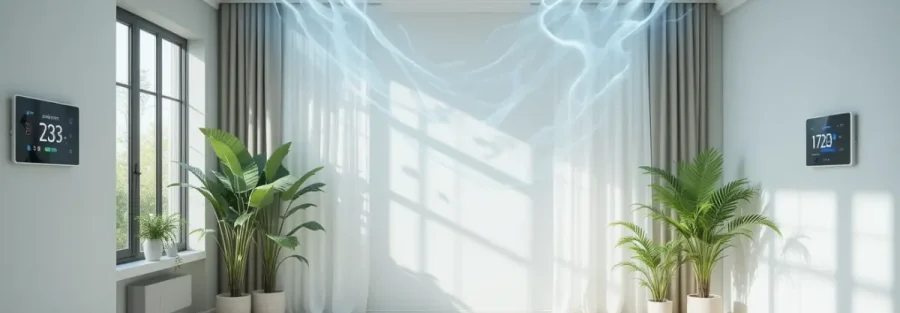
- Smart thermostats can automatically adjust temperature and humidity based on your room occupancy.
- It can be programmed remotely and wisely integrated with air quality sensors.
IAQ Monitoring and DCV Systems
- IAQ (Indoor Air Quality) monitors detect real-time levels of VOCs, CO2, and PM.
- DCV (Demand-Controlled Ventilation) systems can adjust ventilation based on room occupancy and collective air quality data.
Energy Recovery Ventilators (ERV)
- ERVs tend to exchange moisture and heat between incoming and outgoing air.
- This further reduces HVAC overload and maintains air freshness to minimize your energy costs.
IAQ Beyond Homes: Commercial and Educational Buildings
Offices and Schools
Educational and commercial buildings frequently face IAQ challenges due to high occupancy levels.
- Ventilation Rate Guidelines: Include at least 15 cfm (cubic feet per minute) per person to spread fresh air across classrooms.
- Zoned HVAC Systems: These systems offer separate areas that can be conditioned independently, further improving air distribution and comfort.
Conclusion
HVAC systems play a critical role in battling against potential indoor air pollution. It does more than maintain indoor temperature; it controls humidity, filters contaminants, and ensures proper ventilation.
By rightly prioritizing HVAC maintenance with our installation and maintenance support services, you can effectively upgrade your system components and integrate smart technologies to create a healthier and more comfortable space.
Powerize Arabia, your reliable HVAC contractor in Jubail, our experts can assess your system, suggest upgrades, and ensure it functions at peak performance all year round.
FAQs
1.How often should I change HVAC filters?
HVAC filters can be changed once every one to three months, based on your usage and indoor pollution levels. Our experts will analyse your usage and potential mould formation levels to determine filter change.
2. Can HVAC systems remove viruses from the air?
Yes. By incorporating HEPA filters or high-MERV filters and UV-C purification, your HVAC systems can wisely reduce airborne viruses from forming and spreading around.
3. What is the ideal indoor humidity level?
The ideal indoor humidity level lies anywhere between 30% 50% to prevent mould formation and to support respiratory health.
4. Do smart thermostats improve air quality?
Yes. Smart thermostats can maintain optimal temperature and humidity, further reducing the likelihood of bacteria and mould growth.
5. Why is professional HVAC maintenance important?
Regularly hiring HVAC maintenance services ensures that your system runs efficiently, maintains air quality, and extends the system’s lifespan.